Discover South West Crete
From Paleochora - Sougia - Moni - Agia Roumeli - Finix - Loutro - to Hora Sfakia.
Seaside Sougia and the Village of Moni
Sougia is a quiet place with a wide and long pebble beach, a few family-owned hotels and self-catering accommodation, bars-cafes, and tavernas, all in a very relaxed and laid-back atmosphere.
Approaching Sougia Village
Village of Moni
4km outside Sougia lies the little village of Moni positioned on the hillside. St Nikolas chapel built in early 1300 and the Chapel of Holy Mary is worth visiting. The Monastery Estate guesthouse is the place to stay.
How to get to Sougia
You can drive to Sougia, from Paleochora, it takes around 30-40 minutes. Ideal, if you like to visit and stay for a day.
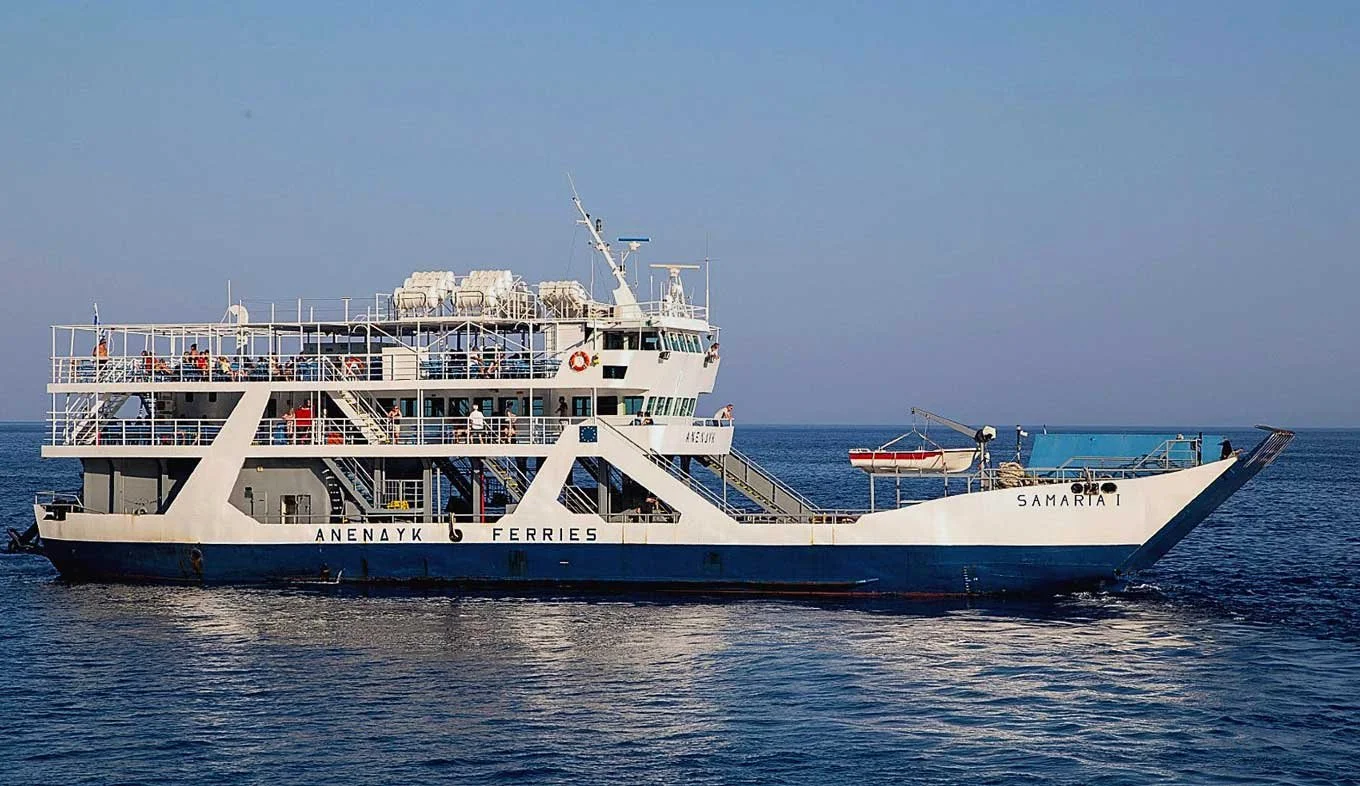
Anendyk ferries
I took the ferry. Between April and October, there is a daily ferry connection from Paleochora. There is also a ferry connecting to Sougia with Hora Sfakion, Loutro and Agia Roumeli.
The timetable for Anendyk ferries here.
Agia Roumeli
is situated at the “bottom end” of Samaria Gorge and the village is not connected to any road network. To get here is by boat or to walk. Agia Roumeli boat service is via Hora Sfakia, Loutro, Sougia, and Paleochora. Anendyk Ferries
Not much you can do here, relaxing, reading, walking, lay on the beach or swim, and visiting the local tavernas.
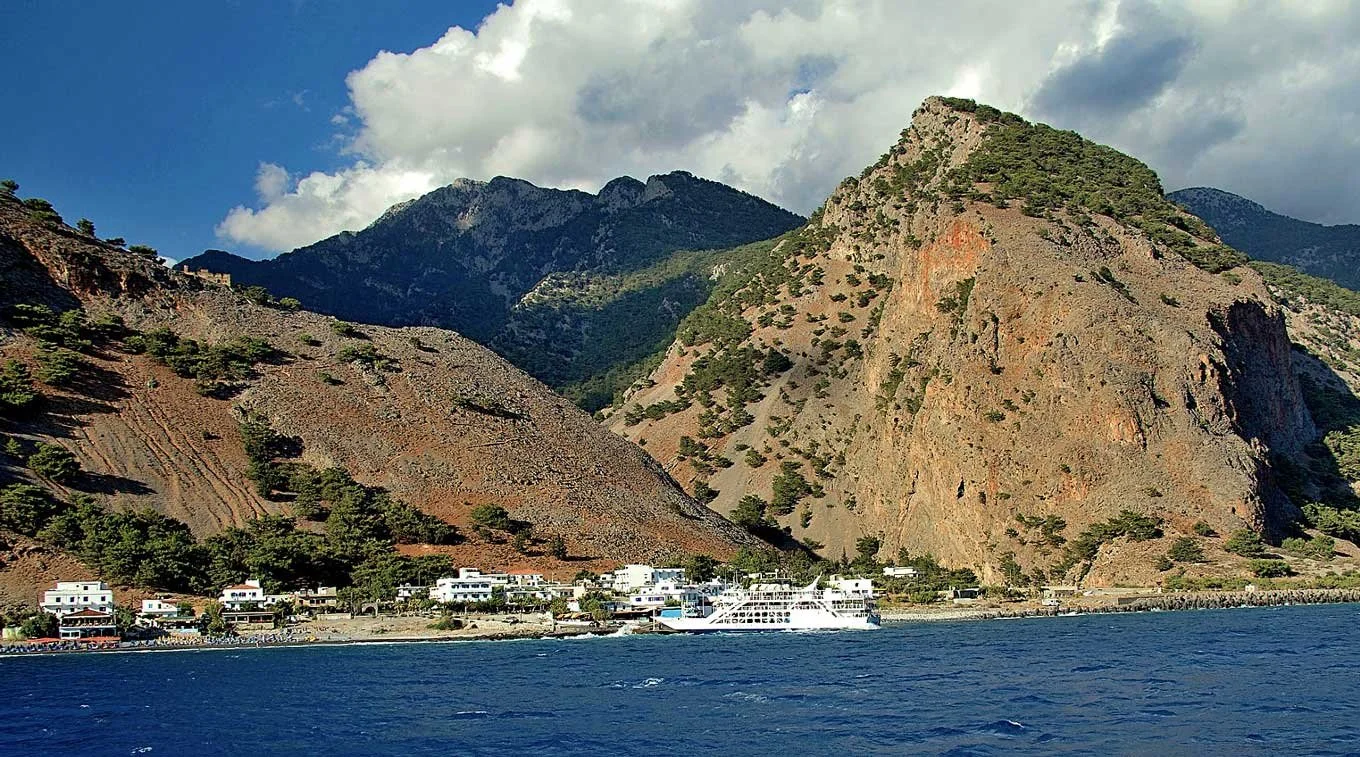
Agia Roumeli village
Samaria Gorge
which claims to be Europe’s longest (it’s a 16km hike), can be visited as a day-trip or as part of a longer excursion. It’s demanding– you’ll feel it the next day – the path is rough and it’s not a walk to be undertaken lightly, avoid the walk during the summer month of July and August.
Samaria Gorge
Walking boots or solid shoes are vital. Bring plenty of water. Normal walking pace, with regular stops, the walk down takes between five and seven hours (though you can do it quicker) Samaria, good information about Samaria Gorge.
Beware of the kilometer markers: these mark only distances within the National Park and it’s a further 2km of hot walking before you reach the sea at Agía Roumeli.
Get your Guide Adventures Crete
Mountainous South West Crete
and the views from the ferry towards the massive mountains are impressive, here and there broken by gorges and beaches some more or less deserted, others like Marmara beach and the small Likos Beach followed by the small bay of Phoenix,
The old Phoenix hotel and taverna is nicely positioned on the bay of Phoenix. A small pebble beach shaded here and there from large tamarisk trees.
The Bay of Phoenix walk to Loutro
It’s about 20-25 minutes walk to the picturesque village of Loutro, with its unique atmosphere and location, simply wonderful. I skip the walk and continued my journey by ferry to Hora Sfakia Village
Sfakia region
is located on the southern slope of the White Mountains it combines high mountains which drop steeply into the Libyan sea, deep gorges and a wealth of unspoiled natural beauty.
The Sfakia region has about 2,700 inhabitants. There is no mass tourism here because of the inaccessible mountain terrain and road distance with lots of roads bends from the airports and main ports of Crete.
A bit of history
The region of Sfakia was the center of resistance against the Venetians and the Turks and other, later invaders.
It was also here in the Sfakia region that the evacuation of the remnants of Creforce took place end of May 1941. See NZ history article - The battle for Crete here -
Hora Sfakia Village
Hora Sfakia Village
is a smallish village, less than 400 people live here. Family small owned hotels, self-catering some on the seafront as well as bars and tavernas. For a good stroll, the seafront promenade with its sun shaded covering is very popular.
Port with boat service to Paleochora, Sougia, Agia Roumeli, Loutro and to the island of Gavdos.
